

Analysts warn E1 plan will fragment Palestinian lands, undermining the viability of a future Palestinian state.
Israel’s approval of a long-delayed and controversial settlement plan on Wednesday intends to end any chance of a contiguous Palestinian state, say analysts, local human rights groups and Palestinian communities likely to be affected.
Known as East1 or E1, the plan would link thousands of illegal settlements in occupied East Jerusalem – which is already illegally annexed by Israel – to the expanding Maale Adumim settlement bloc in the occupied West Bank.
This would fully sever East Jerusalem – which Palestinians have long considered the capital of their own future state – from the rest of the occupied West Bank.
European states have long warned that the E1 plan is a red line, said Tahani Mustafa, an expert on Israel-Palestine with the International Crisis Group (ICG).
Some of these states, such as Ireland, France, Norway and Spain, have recently announced plans to recognise a Palestinian state in the face of mounting pressure to take action against Israel for its war in Gaza.
Israel’s far-right finance minister, Bezalel Smotrich, warned last year that a new settlement would be established for every country that recognises Palestine.
More recently, Smotrich, who himself lives in an illegal settlement on Palestinian land, said last week that the E1 plan would “bury” hopes for a Palestinian state.
Israeli politicians, including Smotrich, have long been open in remarking that the establishment of settlements in the occupied West Bank creates “facts on the ground” and regard the territory as an integral part of the “land of Israel”.
The E1 plan was first drummed up in 1994 under then Israeli Prime Minister Yitzhak Rabin, just a year after he inked the United States-backed Oslo Accords, which ostensibly aimed to bring about a Palestinian state before the new millennium
In 2004, Israel began building a police station and constructing new roads in that area of Palestinian land. Since then, construction and further planning have been mostly frozen to appease Western leaders, who feared that building thousands of new housing units there would make it impossible to establish a Palestinian state across the occupied West Bank and Gaza.
Yet since the Hamas-led attack on southern Israel on October 7, the US and Europe have allowed Israel to violate every previous “red line” in the name of “self-defence”, said analysts and human rights monitors.
Over the last two years, Israel has carried out its war on Gaza – killing more than 62,000 Palestinians and destroying the territory – and has violently attacked large swaths of the West Bank, forcing out tens of thousands of Palestinians from their homes.
Israeli soldiers and settlers have also ramped up their violence against Palestinians, killing more than 1,000 people without repercussions.
Along with severing East Jerusalem, the controversial plan would physically split the north of the West Bank from the south, further confining Palestinians to ever smaller and isolated pockets of land.
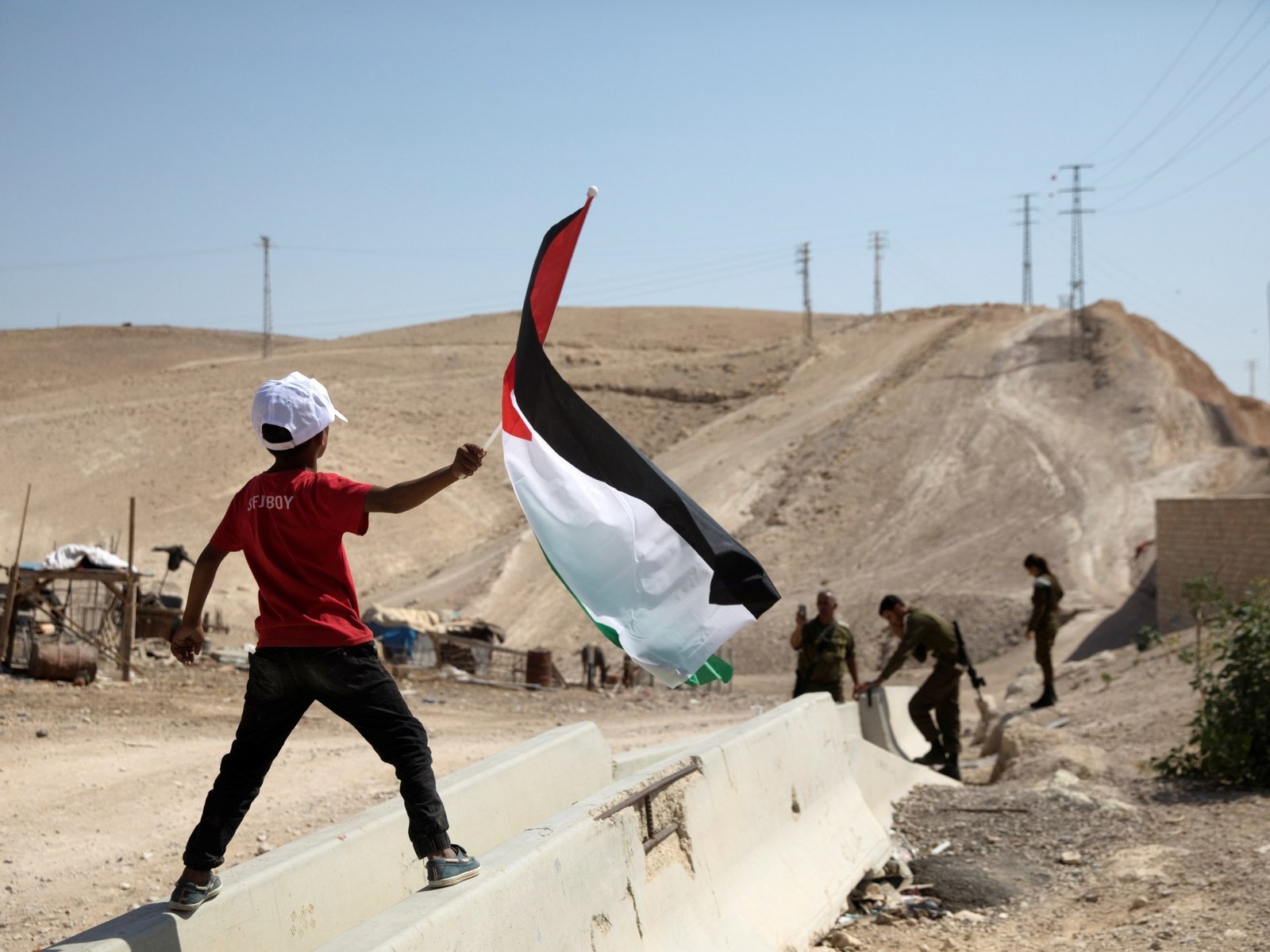
On top of that, several thousand people live in 18 Palestinian shepherd communities in the area encompassing the E1 settlement plan.
The United Nations and Israeli and Palestinian human rights groups have said this plan would uproot Palestinian communities and likely constitute a “forced transfer of a population”, which is a crime against humanity under international law.
“It is very strategic for Israel to push these communities [off their land],” said Al-Haq’s Jadallah.
For decades, shepherd communities in the Jordan Valley have protected the possibility of a Palestinian state by refusing to leave their land, despite facing repeated settler attacks and demolition orders.
Most of these communities migrated to Khan al-Ahmar – an area in the central West Bank between Jerusalem and the Maale Adumim settlement – after they were driven out of the Naqeb (Negev) desert by Israel in the 1950s.
The expulsions were part of a broader campaign of ethnic cleansing, in which 750,000 Palestinians were expelled from their lands by Zionist militias to make way for the state of Israel – an event Palestinians refer to as the Nakba or Catastrophe.
Imad al-Jahalin, the leader of a shepherd community in Bir al-Maskub, one of many villages in the E1 zone, says his community has managed to protect itself from expulsion for years.
Last year, the community hired an Israeli Jewish lawyer to file a lawsuit against settlers who occupied some of their homes. The rights group Amnesty has previously accused the Israeli court system of serving to “rubber stamp” Israel’s occupation in the occupied Palestinian territories.

