

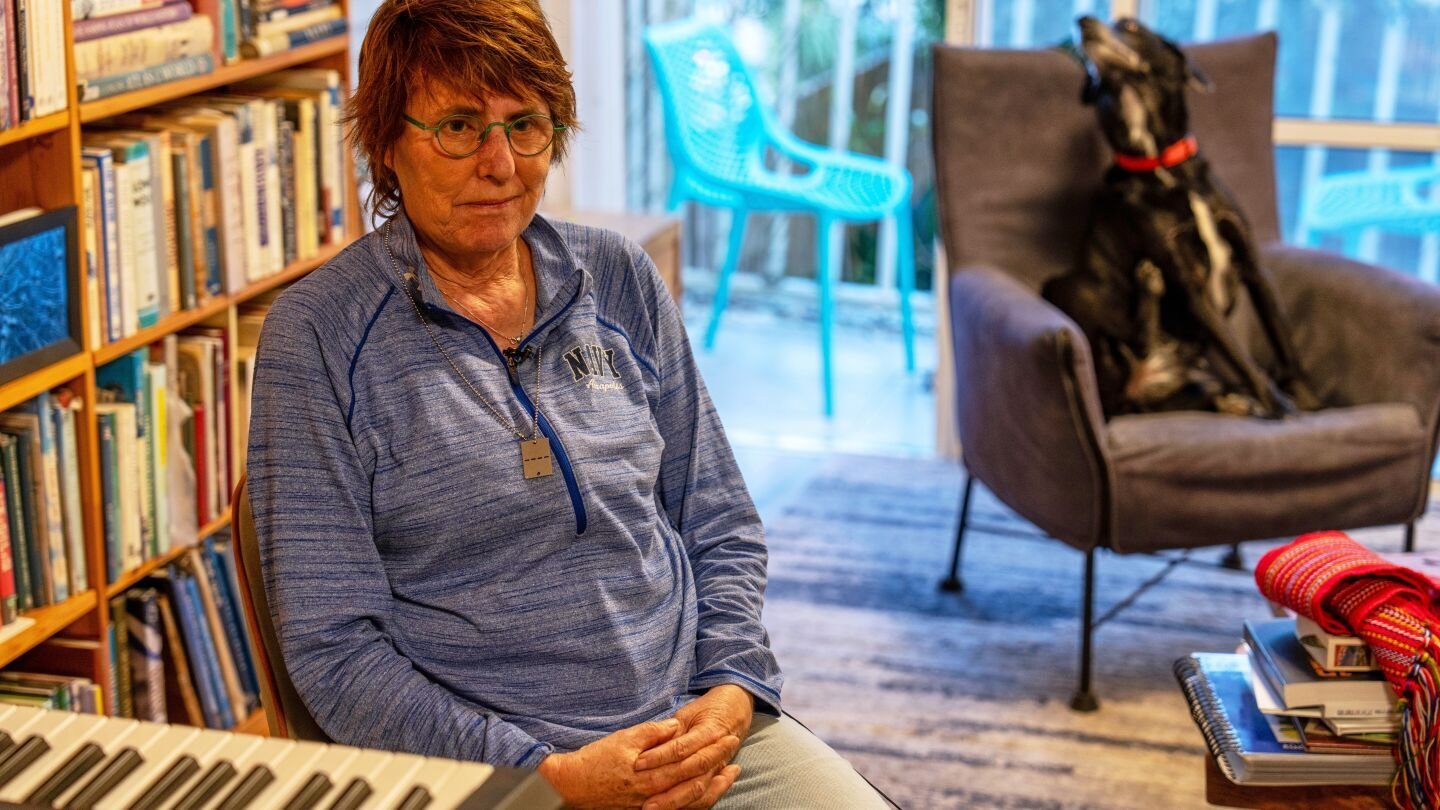
ZICHRON YAACOV, Israel (news agencies) — On Tal Hartuv’s chest is a jagged scar, one of 18 stab wounds on her body from a brutal attack outside Jerusalem in 2010 that killed her friend. Next to the 7-centimeter (3-inch) mark rests a dog tag inscribed with the words “Our heart is captive in Gaza,” a popular symbol of support for a ceasefire deal exchanging Israeli hostages for Palestinian prisoners.
On Friday, as many were celebrating a deal between Israel and Hamas after two years of war, Hartuv read through the list of Palestinian prisoners set to be released and saw the name Iyad Hassan Hussein Fatafta. He was one of three men who tried to kill her and who were convicted of killing her friend Kristine Luken, an American who was visiting Israel as a tourist.
Survivors like Hartuv and families of those killed in attacks have faced a wrenching dilemma throughout the war: Should the killers of their loved ones go free, risking future attacks, or should hostages held in the Gaza Strip be left to their fate?
“I can feel thrilled and hopeful and joyful that our hostages are coming home,” said Hartuv, who changed her name as part of her rehabilitation. “But I can still feel angry, I can feel betrayed, I can feel hollow. They’re not mutually exclusive,” she said.
No one from the Israeli government reached out to let her know he would likely be released. She received the list from a journalist.
By Monday, Hamas is to begin releasing the remaining 48 Israeli hostages held in Gaza, around 20 of them believed to be alive. Israel will release around 2,000 Palestinians, including senior militants convicted of deadly attacks, as well as people convicted of lesser offenses and those held without charge under what is known as administrative detention.
Twenty-two years ago, a suicide bomber blew up Bus 37 in the northern Israeli city of Haifa, killing 17 people, including nine children heading home from school.
Israel convicted five Palestinians of assisting the bomber. Three were released in 2011 as part of an exchange for Gilad Shalit, an Israeli soldier held in Gaza. A fourth was released during the last ceasefire, earlier this year.
For years, Yossi Zur, whose 17-year-old son, Asaf, was killed in the 2003 Haifa bombing, was a leader campaigning against releases, especially against the 2011 exchange, in which 1,027 Palestinian prisoners were released.
Zur remembers being heartbroken as buses were loaded with convicted militants leaving prison.
Those released in the Shalit deal included Yahya Sinwar, who went on to orchestrate the Oct. 7, 2023, attack that triggered the war. Sinwar became Hamas’ top leader before he was killed by Israeli troops last year.
“It was my failure that I did not manage to protect my son, and now I’m not managing to prevent his murderers from going out of prison,” Zur said.
But when fellow activists reached out to him to protest the ceasefire exchanges in the current war, he declined.
“With the amount of people that were taken on Oct. 7, and with a range of ages, I just came to the conclusion that it’s not going to be worth the fight this time,” he said. “We need to bring them back.”
Hamas-led militants killed some 1,200 people in the Oct. 7 attack and abducted 251.

