

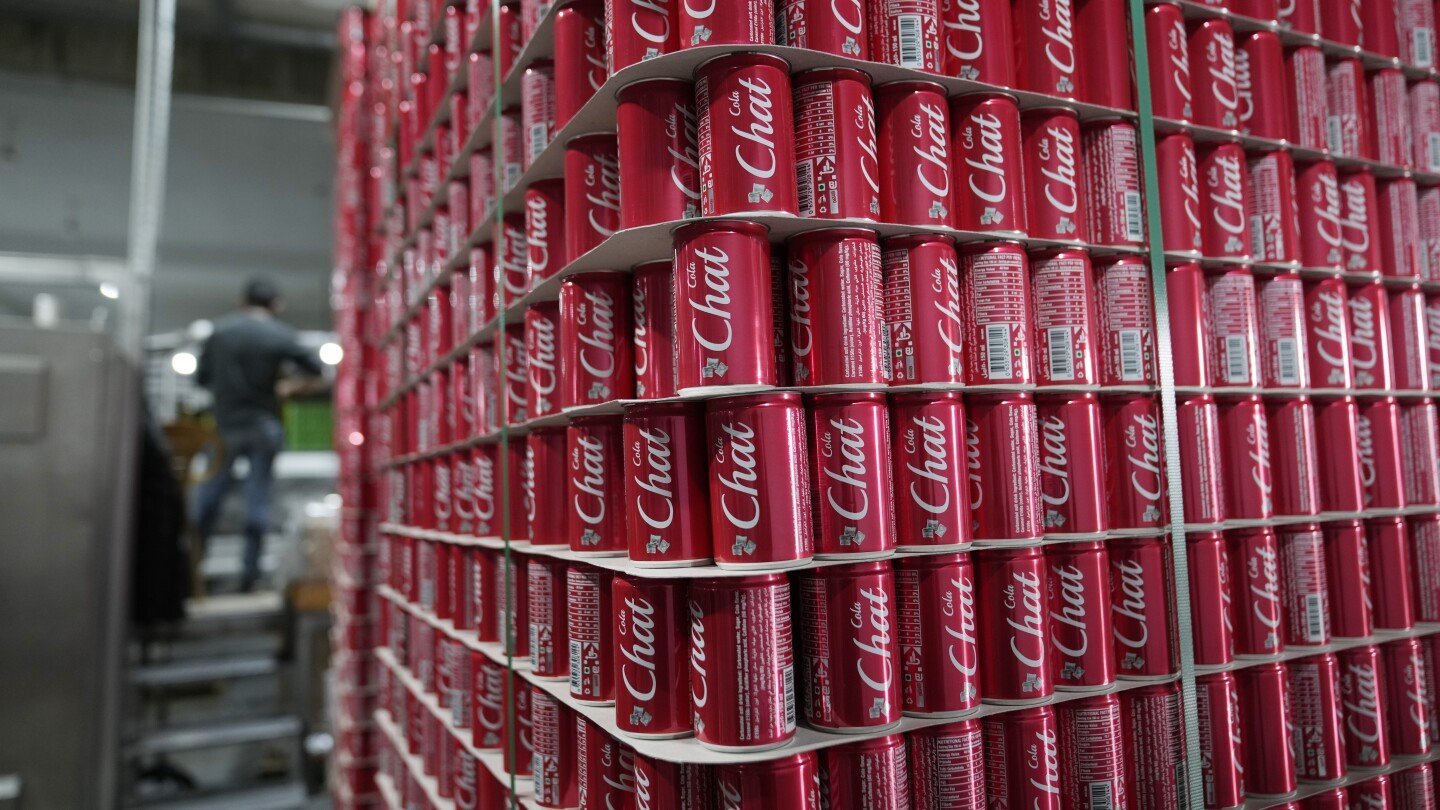
SALFIT, West Bank (news agencies) — Order a Coke to wash down some hummus in the Israeli-occupied West Bank these days and chances are the waiter will shake his head disapprovingly — or worse, mutter “shame, shame” in Arabic — before suggesting the popular local alternative: a can of Chat Cola.
Chat Cola — its red tin and sweeping white script bearing remarkable resemblance to the iconic American soft drink’s logo — has seen its products explode in popularity across the occupied West Bank in the past year as Palestinian consumers, angry at America’s steadfast support for Israel in its war against Hamas in Gaza, protest with their pocketbooks.
“No one wants to be caught drinking Coke,” said Mad Asaad, 21, a worker at the bakery-cafe chain Croissant House in the West Bank city of Ramallah, which stopped selling Coke after the war erupted. “Everyone drinks Chat now. It’s sending a message.”
Since Hamas’ Oct. 7, 2023, attack triggered Israel’s devastating military campaign in the Gaza Strip, the Palestinian-led boycott movement against companies perceived as supportive of Israel gained momentum across the Middle East, where the usual American corporate targets like McDonald’s, KFC and Starbucks saw sales slide last year.
Here in the West Bank, the boycott has shuttered two KFC branches in Ramallah. But the most noticeable expression of consumer outrage has been the sudden ubiquity of Chat Cola as shopkeepers relegate Coke cans to the bottom shelf — or pull them altogether.
“When people started to boycott, they became aware that Chat existed,” Fahed Arar, general manager of Chat Cola, told media from the giant red-painted factory, nestled in the hilly West Bank town of Salfit. “I’m proud to have created a product that matches that of a global company.”
With the “buy local” movement burgeoning during the war, Chat Cola said its sales in the West Bank surged more than 40% last year, compared to 2023.
While the companies said they had no available statistics on their command of the local market due to the difficulties of data collection in wartime, anecdotal evidence suggests Chat Cola is clawing at some of Coca-Cola’s market share.
“Chat used to be a specialty product, but from what we’ve seen, it dominates the market,” said Abdulqader Azeez Hassan, 25, the owner of a supermarket in Salfit that boasts fridges full of the fizzy drinks.
But workers at Coca-Cola’s franchise in the West Bank, the National Beverage Company, are all Palestinian, and a boycott affects them, too, said its general manager, Imad Hindi.
He declined to elaborate on the business impact of the boycott, suggesting it can’t be untangled from the effects of the West Bank’s economic free-fall and intensified Israeli security controls that have multiplied shipping times and costs for Palestinian companies during the war.
The Coca-Cola Company did not respond to a request for comment.
Whether or not the movement brings lasting consequences, it does reflect an upsurge of political consciousness, said Salah Hussein, head of the Ramallah Chamber of Commerce.
“It’s the first time we’ve ever seen a boycott to this extent,” Hussein said, noting how institutions like the prominent Birzeit University near Ramallah canceled their Coke orders. “After Oct. 7, everything changed. And after Trump, everything will continue to change.”
President Donald Trump’s call for the mass expulsion of Palestinians from Gaza, which he rephrased last week as a recommendation, has further inflamed anti-American sentiment around the region.

