

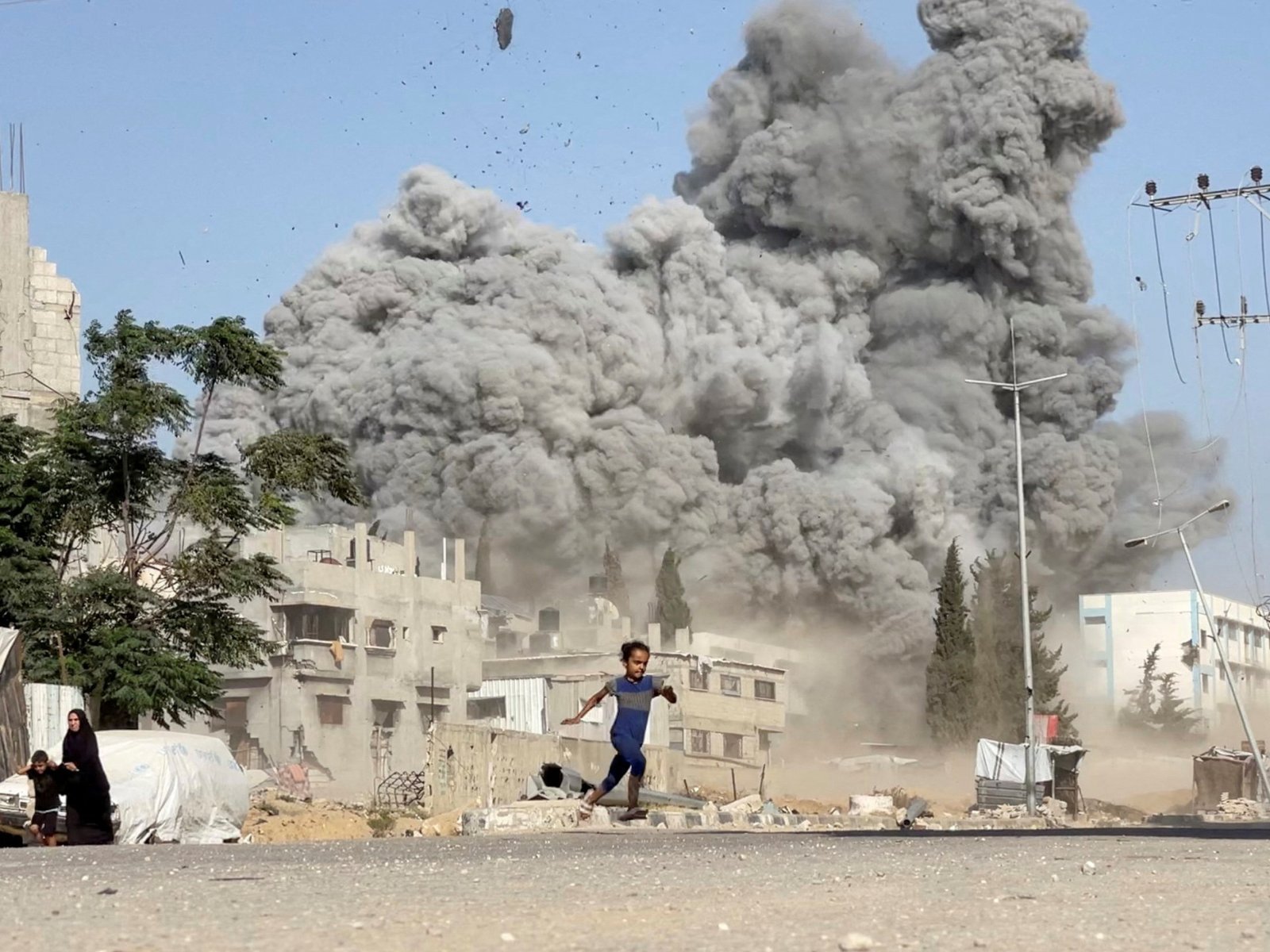
Israel has achieved plenty of short-term military gains, but will that outweigh regional, and international, isolation?
In the last two years, as well as its war on Gaza and increasingly violent occupation of the West Bank, Israel has launched attacks on Iran, Lebanon, Syria, and Yemen.
The most recent attacks on Syria were launched this week, going so far as to hit the country’s Ministry of Defence.
Of course, the Israelis point to their justifications for the attacks on Syria – principally, in Israel’s telling, to defend the Syrian Druze minority. A US-brokered ceasefire has taken effect, but whether it holds remains to be seen.
In Lebanon, Israel claimed it wanted to stop the threat posed by Hezbollah.
The attacks on Iran, it said, were to end that country’s attempt to build a nuclear bomb.
And in Yemen, Israel’s bombing was a response to attacks from the country’s Houthi rebels.
Explanations aside, the question becomes whether the Israelis can continue to act in a manner that has many around the world, and particularly in the Middle East, seeing them as the aggressor.
The Israeli argument is that all these conflicts – and the more than 58,000 Palestinians killed in Gaza – are necessary because Israel faces an existential battle that it has no choice but to win.
Israel is taking advantage of a weakening international order and a moment of flux in the way the world is run, particularly with the United States under President Donald Trump openly moving towards a more transactional foreign policy.
Western countries had previously attempted to maintain the idea of a liberal international order, where institutions such as the United Nations ensure that international law is followed.
But Israel’s actions, over decades, have made it increasingly hard to maintain the pretence.
Impunity over relationship-building
The world has been unable to stop Israel from continuing its occupation of Palestinian land, even though it is illegal under international law.
Settlements continue to be built and expanded in the West Bank, and settlers continue to kill unarmed Palestinians.
And until the rules get rewritten, it increasingly feels like might equals right. Israel, the only nuclear power in the region, is taking advantage.
Supporters of Israel’s actions in the past two years would also argue that those predicting negative consequences for its attacks have been proven wrong.
The main perceived threat to Israel was the Iranian-led Axis of Resistance, and the argument was that these countries and groups would strike Israel severely if the latter went too far in its attacks.
Israel did escalate, and the reaction from Iran and its allies was, in many cases, to choose to stand down rather than risk the total devastation of their countries or organisations.
Iran did attack Israel in a way that the country had not experienced before, with Tel Aviv being directly hit on numerous occasions.
But some of the worst-case scenario predictions did not take place, and ultimately, the direct conflict between Israel and Iran lasted 12 days, without the outbreak of a wider regional war.
In Lebanon, Israel can be even happier with the result.
After an intensified bombing campaign and invasion last year, Hezbollah lost its iconic leader, Hassan Nasrallah, and much of its military capacity, as well as some of its power in Lebanon. It is now, at least in the short term, no longer much of a threat to Israel.
Israel seems to believe weak neighbours are good for it.

