

The US president’s own intelligence chief and the IAEA don’t think Iran is building nuclear weapons at all, but the US and UN are concerned by its rapidly increasing enrichment levels.
Returning early from the Group of Seven summit in Canada early on Tuesday, United States President Donald Trump told reporters he believed Iran was “very close” to building nuclear weapons.
His comments were in keeping with increasingly threatening social media posts and language from Trump against Iran in recent days during Israel’s escalating conflict with its longtime Middle Eastern rival.
Since Friday, Israel has bombed Iran’s top nuclear facilities and has killed at least 14 Iranian nuclear scientists. Israel’s armed forces said the scientists “were key factors in the development of Iranian nuclear weapons” and “their elimination is a significant blow to the regime’s ability to acquire weapons of mass destruction (WMDs).”
Iran insists that its nuclear programme is entirely peaceful and for civilian purposes. It points to Supreme Leader Ali Khamenei’s edict against nuclear weapons to back up its assertion.
But Trump’s comments on Monday echoed the claims made on multiple occasions by Israeli Prime Minister Benjamin Netanyahu for more than two decades – and repeated by him during the current conflict – to justify military action against Iran.
“In recent months, Iran has taken steps that it has never taken before: steps to weaponise enriched uranium,” Netanyahu said on Friday after the first wave of missiles struck Iranian nuclear facilities.
So is Iran indeed close to building a nuclear bomb as Trump and Netanyahu claim? And are there parallels between the accusations against Iran and the fraudulent allegations of nonexistent WMDs used by the US and its allies to attack Iraq in 2003?
We look at the facts and assessments of the US’s own intelligence community and the United Nations nuclear watchdog, the International Atomic Energy Agency (IAEA).
But Gabbard also said there had been an “erosion of a decades-long taboo in Iran on discussing nuclear weapons in public, likely emboldening nuclear weapons advocates within Iran’s decision-making apparatus”.
Iran’s “enriched uranium stockpile is at its highest levels and is unprecedented for a state without nuclear weapons,” she added.
On Monday, when reporters quoted Gabbard’s testimony to Trump, he said: “I don’t care what she said. I think they were very close to having” a nuclear weapon.
“Iran cannot have a nuclear weapon. It’s very simple,” he added.
Gabbard, when asked about Trump’s comments, told reporters that she and the US president were aligned – but did not explain how, given their differing assessments of Tehran’s nuclear programme.
What does US intelligence say about Iran’s nuclear programme?
On June 10, three days before Israel launched its attacks on Iran, Erik Kurilla, the commander of the US military’s Central Command, told a Senate committee that Tehran was “continuing to progress towards a nuclear weapons” programme.
On the surface, that assessment appears to be at odds with Gabbard’s from March. But Kurilla did not say that the US military thought Iran currently had a programme to develop nuclear bombs – but that it was progressing towards such a stage.
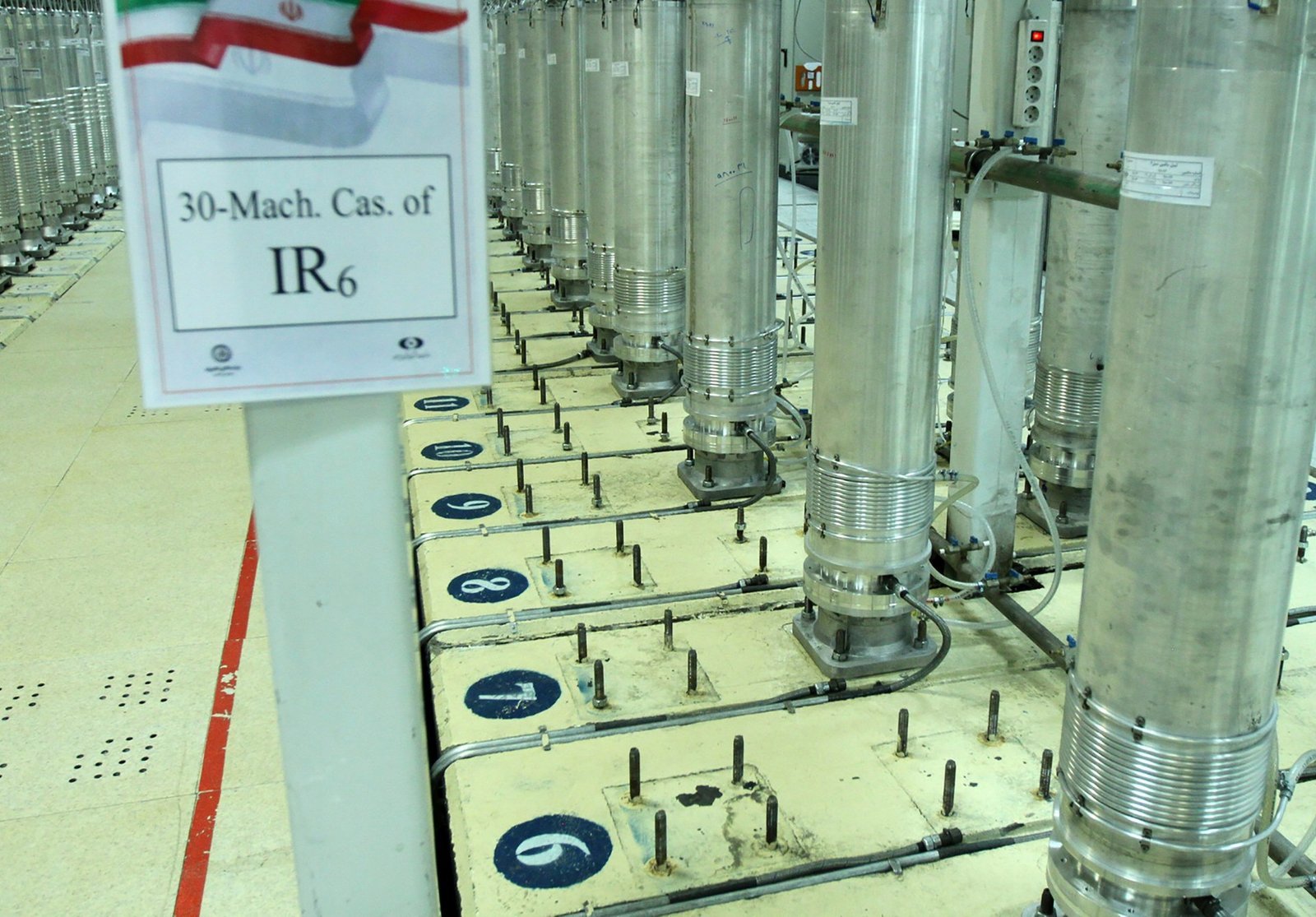
Uranium enrichment is the process of increasing the concentration of the uranium-235 isotope in natural uranium, which normally contains only about 0.7 percent U-235. To build a nuclear weapon, uranium must be enriched to about 90 percent U-235. Once enriched to those levels, uranium is considered “weapons-grade”.
Once uranium is enriched to 60 percent, it reduces the time required to reach weapons-grade, which is why higher enrichment levels attract greater scrutiny from watchdogs like the IAEA.
Iran denies pursuing nuclear weapons and asserts its legitimate right, as a signatory to the nuclear Non-Proliferation Treaty (NPT), to develop nuclear technology for peaceful purposes, including uranium enrichment.
Addressing the UN watchdog’s Board of Governors on June 9, IAEA Director General Rafael Grossi said Iran had accumulated 400kg (880lb) of uranium enriched to 60 percent.
“While safeguarded enrichment activities are not forbidden in and of themselves, the fact that Iran is the only non-nuclear-weapon State in the world that is producing and accumulating uranium enriched to 60 percent remains a matter of serious concern,” he said in a report to the Board of Governors.
On Thursday, a day before Israel’s attacks on Iran’s nuclear facilities, the IAEA board passed a resolution censuring Tehran and accusing it of violating its safeguards-related commitments to the UN agency.
But in an interview with CNN on Tuesday, Grossi was emphatic that Iran’s alleged violations of its assurances had not led his agency to conclude that Tehran was building bombs.
“We did not have any proof of a systematic effort to move into a nuclear weapon,” he said.
Meanwhile, Iran’s Ministry of Foreign Affairs and Atomic Energy Organization have rejected the IAEA’s resolution, insisting that Tehran remained committed to its safeguards obligations.
In his June 10 testimony, Kurilla claimed that if Iran were to decide to “sprint to a nuclear weapon”, it had enough stockpiles and centrifuges to produce up to 25kg (55lb) of weapons-grade uranium in “roughly one week” and enough to build up to 10 weapons in three weeks.

