


The federal government is firing back at Stellantis and General Motors and cutting the number of tariff-free vehicles the automakers can import from the U.S. to sell in Canada.
As CBC News first reported, the two multinational manufacturers will no longer be exempt from paying Canada’s retaliatory tariffs on as many U.S.-assembled vehicles as before.
The move is an attempt to put pressure on the companies to reinvest in Canadian production and workers to get this benefit back and avoid a big tariff bill.
“This action follows the automakers’ unacceptable decision to scale back their manufacturing presences in Canada, directly breaching their commitments to the country and Canadian workers,” the government said in a late-night media release.
Ottawa is taking action after Stellantis announced its plan to expand in the U.S., including moving its production of the Jeep Compass in Brampton, Ont., to Illinois.
General Motors also confirmed Tuesday that it was ending production of its BrightDrop electric delivery vans at a plant in Ingersoll, Ont., due to demand.
The federal government will limit the number of tariff-free vehicles General Motors and Stellantis can import from the U.S. to sell in Canada. The move is designed to pressure the two companies to reinvest in Canadian production.
In April, the federal government offered auto companies exemptions from Canada’s 25 per cent retaliatory tariffs on the American auto sector.
But that benefit came with strings attached: The automakers had to continue making vehicles in Canada and complete the investments they’d already planned.
If companies broke that condition, the government warned it would reduce how many tariff-free vehicles they could import from the U.S.
Finance minister François-Philippe Champagne and industry minister Mélanie Joly released a joint statement saying Stellantis and GM have contravened “their legal obligations to Canada.”
The ministers announced that effective immediately, the government is lowering the amount of American-assembled vehicles GM can import tariff-free by 24 per cent and cutting Stellantis’s amount by 50 per cent.
“I think Canadians and the industry want the government to be tough on companies that don’t own up to those partnerships that in many cases have been worth billions,” said Flavio Volpe, president of the Automotive Parts Manufacturers’ Association.
“This is a great move.”
But Huw Williams, national spokesperson for the Canadian Automobile Dealers Association, says the government’s response will hurt Canadian consumers.
“The price of vehicles are going to go up the more you have tariffs,” Williams said.
“We’ve been clear with this government that when your trading partner shoots you in the foot, it’s not a good idea to pull out another gun and shoot yourself in the other foot.”
Trump playing ‘hardball’
Unifor national president Lana Payne said she think’s Ottawa’s “carrot-and-stick approach” will work.
Payne said U.S. President Donald Trump is playing “hardball” right now and “extorting corporations” to try to move production to the U.S.
“He’s doing everything he can to surgically destroy our industrial economy in Canada, including the auto industry,” Payne told CBC’s Power & Politics.
“If we don’t push back hard against him and against these companies, we’re going to lose it all.”
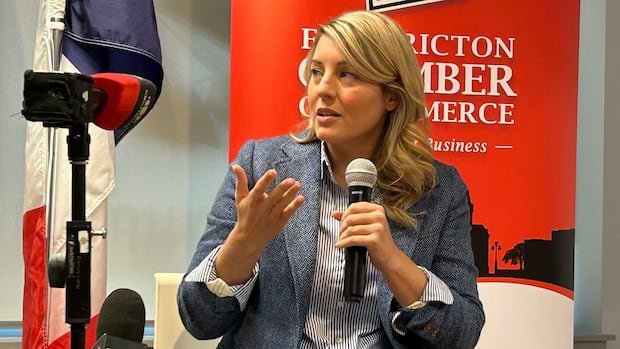
Canadian politicians of all stripes expressed anger and frustration over Stellantis moving Jeep production from Brampton, Ont., to Illinois — and Ottawa is considering taking legal action.
Joly has also threatened legal action against Stellantis, noting the government gave it millions of dollars contingent on the company keeping its Canadian footprint.
She posted on social media Thursday she met with GM, the Ontario government and the union to talk about the next step for workers and that she expects an update in 15 days.
Ontario Premier Doug Ford has threatened to sue GM if it breaches its contract and doesn’t find a new product for the Ingersoll plant.
Prime Minister Mark Carney said on Thursday that while GM indicated it would honour its obligations to pay workers, that’s not enough.
“We’re not satisfied with that,” he said.
At an announcement with Ford, Carney said they are working on figuring out what else can be done with the GM plant and if it could be part of Canada’s upcoming defence industrial strategy. Carney has been working on a plan to pivot Canada away from over-reliance on the U.S.
Carney also pointed to ongoing talks with the Trump administration to try to get some sectors relief from being pummelled by American tariffs.
The prime minister warned that if Canada doesn’t make progress on those talks, the government will “do what’s necessary to protect our workers.”
“It starts with building, taking the control there. But it’s also not having unfair access to our market, if we don’t have access to another market,” Carney said. “We’re not at that point.”
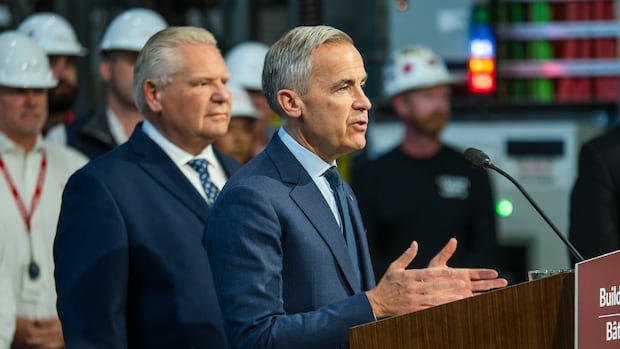
Prime Minister Mark Carney was asked by reporters about his approach to U.S. trade negotiations, highlighting discrepancies with that of Ontario Premier Doug Ford who has advocated for tougher treatment of the Trump administration.
Trump has signalled he wants to dominate auto manufacturing. The White House has been hitting Canada’s auto sector with a 25 per cent tariff on all finished vehicles that aren’t compliant with the Canada-U.S.-Mexico Agreement (CUSMA).
U.S. Commerce Secretary Howard Lutnick told an audience in Toronto this month he wants to drain auto assembly from Canada.
Canada has been in talks with the U.S. to try to lower tariffs on the auto sector. But Carney suggested on Thursday those negotiations in Washington are now focused on trying to get relief for the steel and aluminum sector first hit hard by Trump’s levies.
Conservative Leader Pierre Poilievre took aim at Carney on Thursday morning, saying he’s broken his promise to negotiate a win with Trump and protect Canada’s auto sector.
“We need him to actually keep his promise and defend auto workers in the negotiations with the Americans,” Poilievre said.
Stellantis and GM have not yet responded to requests for comment from CBC News.
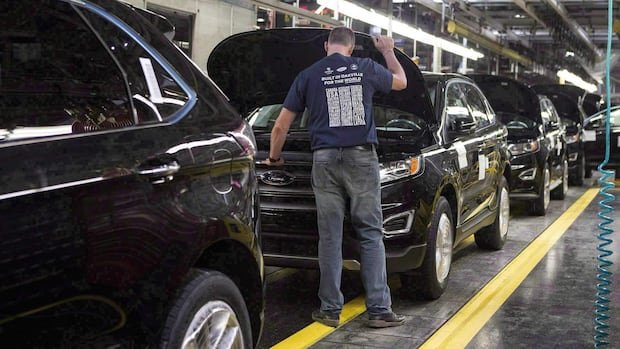
The Trump administration is exploring whether auto imports threaten national security.

