

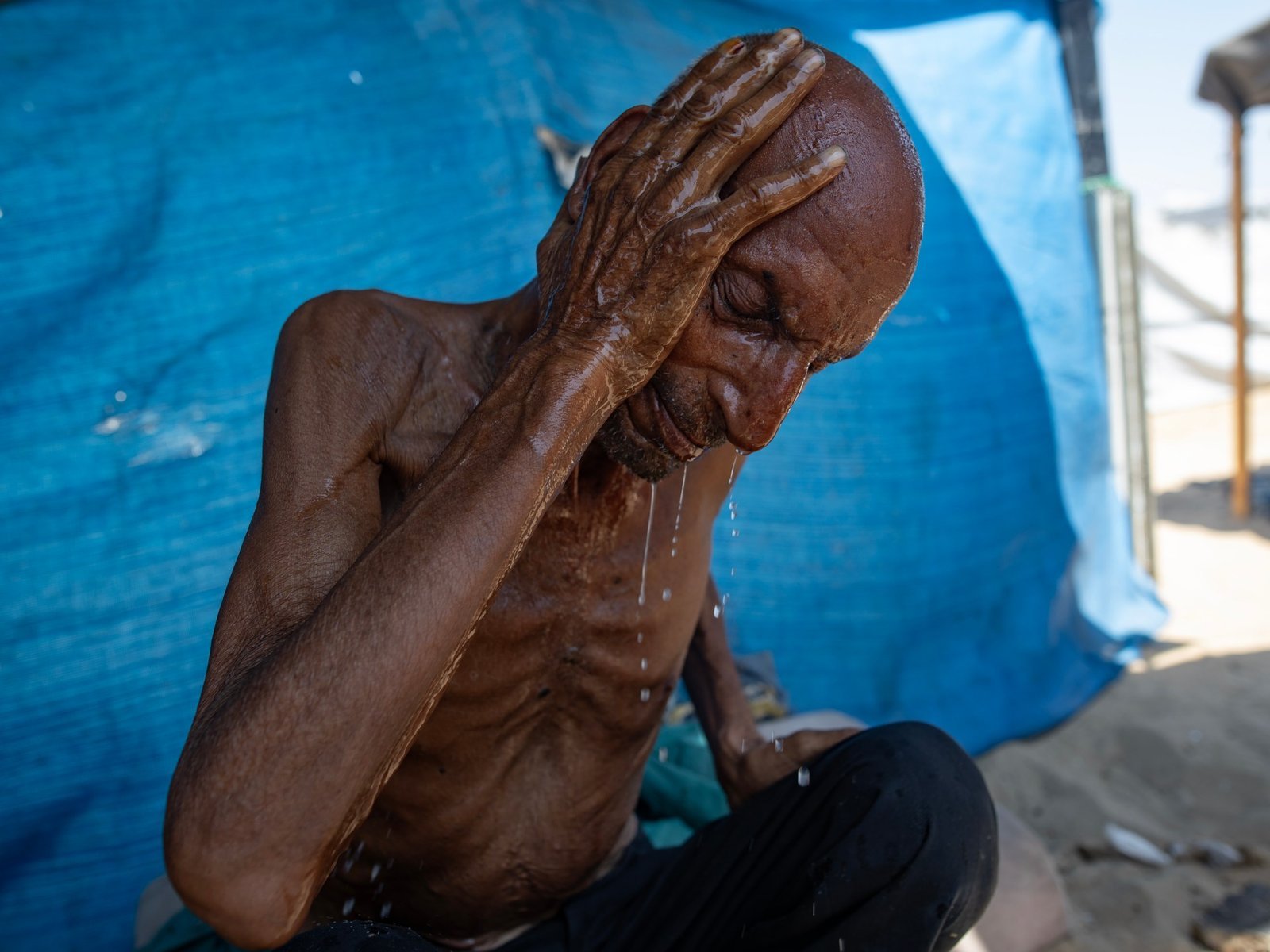
What does starvation do to the body? And is famine inevitable in Gaza?
Aid agencies say the limited amount of aid Israel has allowed into Gaza in the last week is unlikely to avert the famine experts have warned about for months.
While at first most of the starvation-related deaths were among children and infants, increasingly, older people are succumbing to the hunger that Israel has imposed upon the enclave since March.
On Sunday, six more adults died from malnutrition, bringing the number of adults to die from hunger in Gaza to 82 over the last five weeks, when such deaths were first recorded.
Ninety-three children have also been killed by Israel through the man-made malnutrition it has imposed upon the enclave since its war began.
So, how does starvation happen? Are we seeing the whole picture?
Here’s what we know.
“It’s awful,” Dr James Smith, an emergency doctor who has volunteered twice in Gaza, said.
In the early stages, after being deprived of food for days, the body begins to break down muscle and other tissues.
Soon, metabolism slows, the ability to regulate temperature is lost, kidney function becomes impaired and, critically in Gaza, the immune system begins to falter and the body’s ability to heal from injury is reduced.
Once the body’s reserves are used up, it loses the ability to channel nutrients to vital organs and tissues. As a result, essential organs like the heart and lungs become less effective. Muscles shrink and people feel weak.
Eventually, as the body’s protein stores are ravaged, the body’s tissues are broken down, with death not far away.
While scientific research on the subject has been limited for ethical reasons, it’s estimated that a typically well-nourished and otherwise healthy adult could survive without food for between 45 and 61 days.
What does starving to death feel like?
However, after 22 months of war, few people in Gaza could be described as well nourished or healthy, leaving them susceptible to malnutrition and the many infectious diseases prevalent in the enclave.
“With starvation, the body loses the ability to launch an immune response to diseases or injuries it could normally deal with, such as gastroenteritis, trauma or a respiratory infection, so it’s often malnutrition plus an infection that kills,” Dr Smith continued.
“However, it isn’t just age. There are social differences, too,” he continued.
“There are currently thousands of orphans roaming Gaza. There is no one to feed them or risk their lives to get food for them, so they’re also more likely to die,” he said.
There is overwhelming evidence that, through the various blockades Israel has imposed on Gaza, the threat of death by starvation has spread from the vulnerable to everyone in Gaza.
In February 2024, five months into Israel’s war on Gaza, the World Health Organization estimated that one in six children under the age of two, especially in Gaza’s north – at the time under Israeli siege – were acutely malnourished.
As of August 2025, 82 adults have starved to death over the last five weeks.
Israel has been controlling the amount of food it allows into Gaza for decades, suggesting it already knows precisely how much is needed to avert, or cause, starvation in Gaza.
In 2007, following Hamas’s takeover of the enclave, Israel instituted its first blockade on Gaza’s population, reducing the aid it allowed into the enclave while still giving public assurances that it was not starving people.
However, documents uncovered after a legal battle between an Israeli NGO and the government confirmed that, between 2007 to 2010, Israel deliberately reduced the food it allowed into Gaza to “minimal subsistence” levels.
“Generationally, the damage [of malnutrition] is lasting,” Dr Abu-Sittah said, citing the lasting impact of starvation on brain function, and the prevalence of other ailments, such as diabetes, high blood pressure and heart disease among survivors.

