

As attacks between Israel and Iran persist, the global economy could face an adverse shock if tensions aren’t contained.
As Israel and Iran exchange deadly salvoes for a fourth day, there are growing concerns that the conflict will spread across one of the world’s key oil- and gas-producing regions. Equity markets initially were roiled after Israel’s surprise attack on Friday but have since stabilised.
A day after Israel killed several of Iran’s top military commanders and nuclear scientists and damaged some of its nuclear sites, Israel then hit Iran’s fossil fuel sector on Saturday with Iranian state media reporting a blaze at the South Pars gasfield. More than 220 people have been killed in the Israeli attacks, including at least 70 women and children, according to Iranian authorities.
Iran responded with a barrage of ballistic missile and drone strikes, a small percentage of which succeeded in penetrating Israeli defences, killing at least 24 people.
On his Truth Social platform, United States President Donald Trump warned Tehran that the next “already planned attacks” would be “even more brutal”, adding: “Iran must make a deal [on its nuclear programme] before nothing is left.”
As the conflict between the Middle East’s two most powerful militaries spirals towards a full-fledged war, financial markets and the aviation sector are taking a hit. Analysts are watching oil prices, and investors are turning to safe havens like gold.
And a full-blown war could make things even worse – much worse, experts warned.
Brent crude, the global benchmark, rallied to $74.60 per barrel early on Monday.
That marked an almost 7 percent increase from Thursday, the day before Israel launched its surprise attack.
It is a conduit for one-third of the world’s seaborne oil supplies, channelling roughly 21 million barrels every day.
At its narrowest point, it is 33km (21 miles) wide. Shipping lanes in the waterway are even narrower, making them vulnerable to attack.
The conflict between Israel and Iran has revived a decades-old question of whether Tehran will close the maritime chokepoint, triggering an oil price rally.
Quoting key conservative lawmaker Esmail Kosari, the Iranian news agency IRINN reported that Tehran is considering closing the strait as the conflict with Israel intensifies.
According to Goldman Sachs, a worst-case scenario involving blockades in the Strait of Hormuz could push oil prices above $100 per barrel.
What has happened to the price of oil?
Still, during the Iran-Iraq War from 1980 to 1988, in which both countries targeted commercial vessels in the Gulf, Hormuz was never completely closed.
What’s more, attempts to block the Strait of Hormuz would likely disrupt Tehran’s own exports, especially to China, cutting off valuable revenue.
Oil-importing countries around the world could experience higher inflation and slower economic growth if the conflict persists.
Looking ahead, analysts warned that central banks would face reduced policy flexibility in trying to control rising prices.
“Central bankers from the G7 are currently on an [interest rate] cutting cycle, and so will be worried about a potential energy price shock,” Al Gaaod told media.
The Bank of England has recently slashed the United Kingdom’s base interest rate to 4.25 percent although the US Federal Reserve has held off on cutting rates in the wake of Trump’s tariffs, imposed on almost all countries since he returned to power in January.
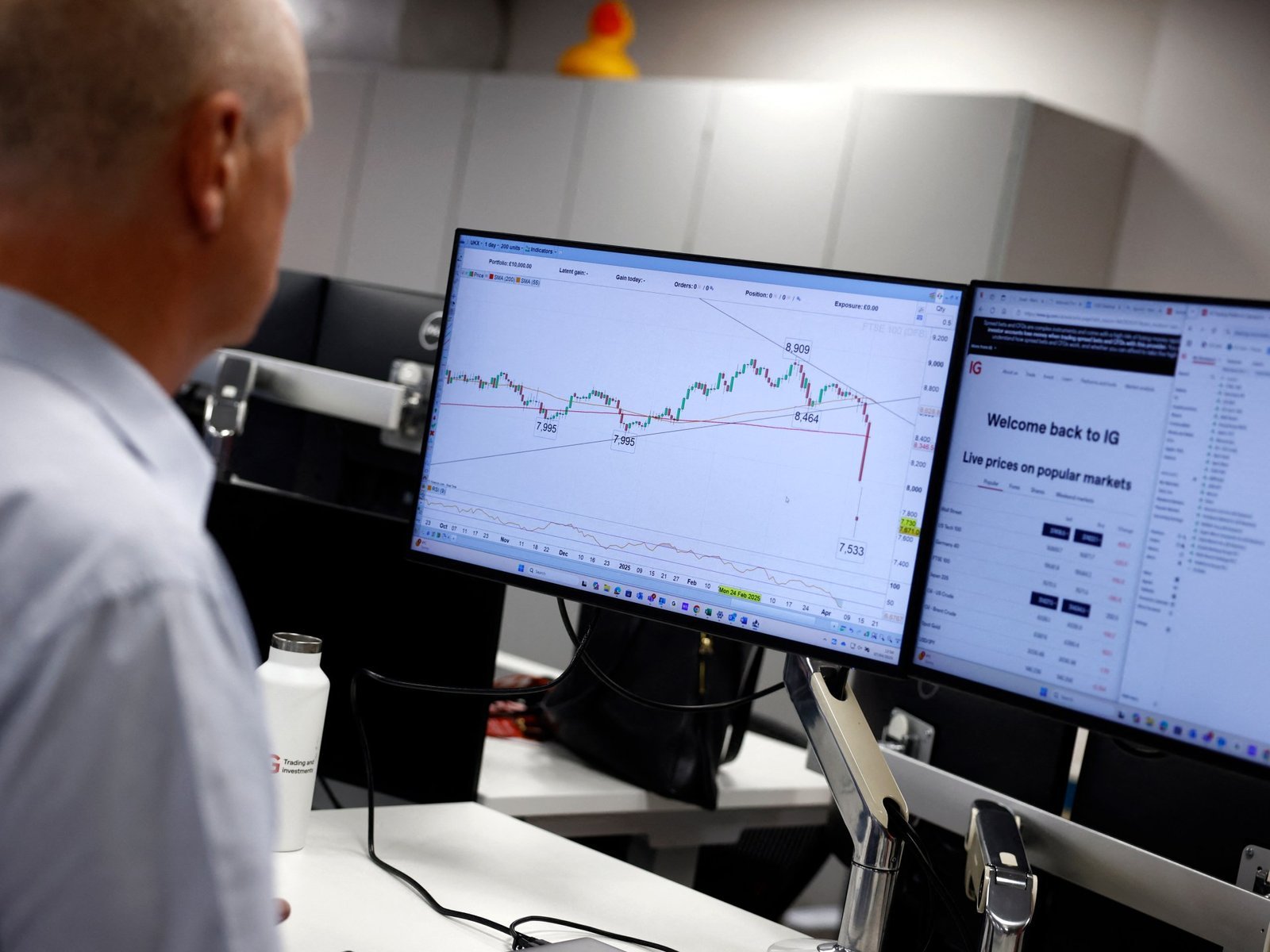
Wall Street has taken a hit. On Friday, the S&P 500 and Nasdaq Composite indices shed 1.1 and 1.3 percent, respectively. In the Middle East, Egypt’s benchmark EGX 30 index fell 7.7 percent on Sunday while the Tel Aviv Stock Exchange 35 Index dropped 1.5 percent.
European equities also drifted down on the news of Israel’s attacks. Germany’s DAX and France’s CAC 40 fell a little more than 1.1 percent at the end of last week while the UK’s FTSE 100 ended 0.5 percent lower on Friday.
Still, some UK companies rallied. BAE Systems, a defence contractor, was up almost 3 percent on Friday, reflecting concerns that tensions could escalate.
In the US, share prices of military suppliers, including Lockheed, Northrop Grumman and RTX, also rose.
Elsewhere, oil companies BP and Shell gained in value with the former closing nearly 2 percent higher and the latter closing at just more than 1 percent higher.
The price of gold was also trading about 1 percent higher on Friday at $3,426 an ounce, close to the record high of $3,500 it hit in April.
On Monday, investors tempered some of their risk-off positioning with oil and gold prices falling and stock prices rising.

